<meta name="google-site-verification" content="0S72xkYcSqqt100ZuIzn_Zif1zL8vIvcXUmc5Tjo10o" />

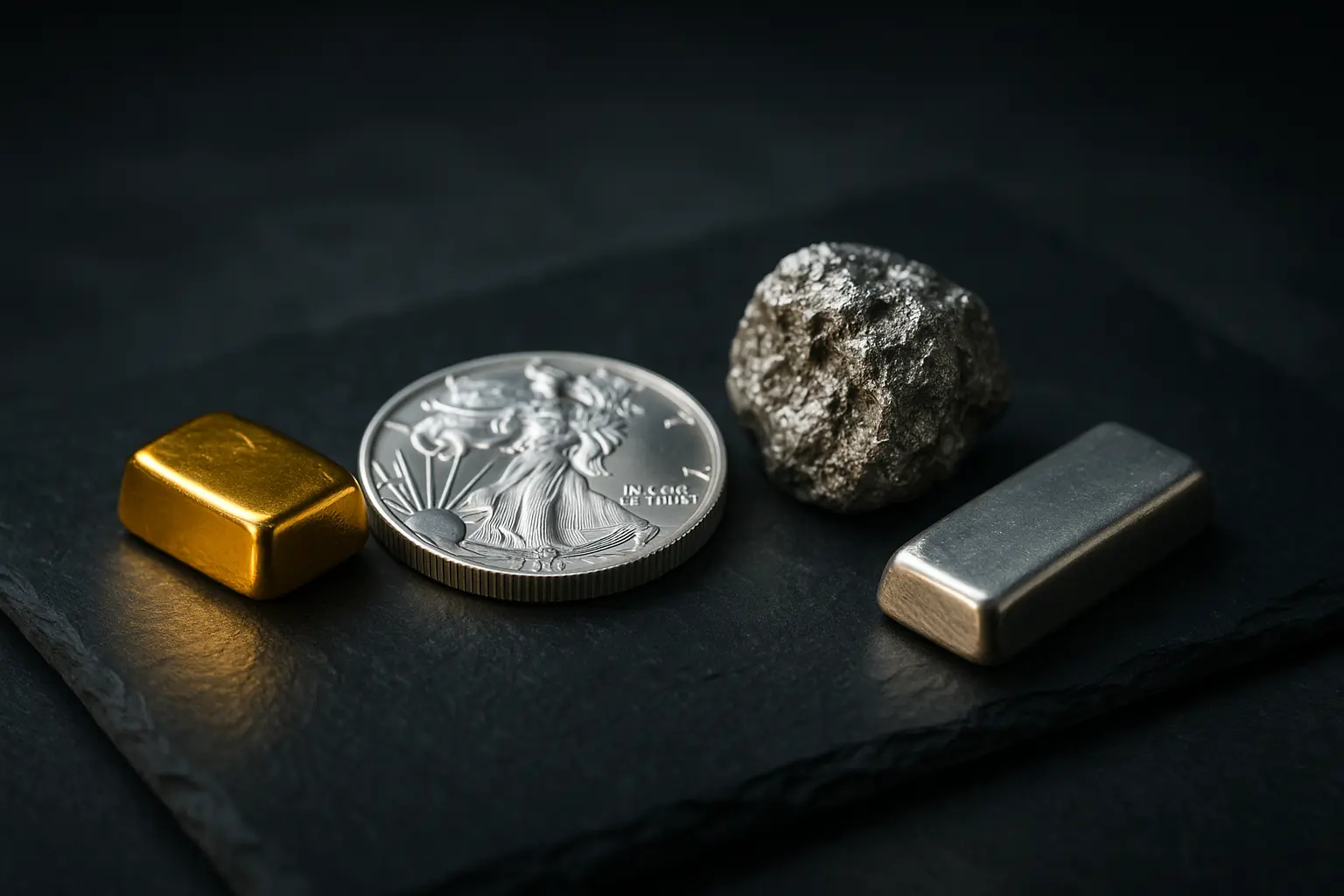
L’essentiel à retenir : Au-delà de l’or, l’argent, le platine et le palladium offrent des opportunités uniques pour diversifier son patrimoine. L’argent, moteur de la transition énergétique, et le duo platine-palladium, pivots de l’automobile et de l’innovation, complètent l’or en tant que piliers de stabilité. Une allocation modérée (5 à 10 %) permet d’équilibrer rendement, résilience et valeurs éthiques, en phase avec une économie durable.
Vous limitez votre stratégie d’investissement à l’or, passant à côté d’opportunités méconnues ? Découvrez les 4 métaux précieux – or, argent, platine et palladium – et leur rôle stratégique dans l’économie mondiale. Au-delà de la fascination historique pour ces actifs, chaque métal cache une dynamique unique : stabilité monétaire pour l’or, potentiel industriel pour l’argent, rareté géopolitique pour le platine, et spéculation risquée pour le palladium. En comprenant leurs forces et leurs risques, vous déjouez les pièges d’une approche simpliste et révélez une richesse cachée, entre refuge sécurisant et croissance durable.
Sommaire
Pourquoi s’intéresser aux métaux précieux au-delà de l’or ?
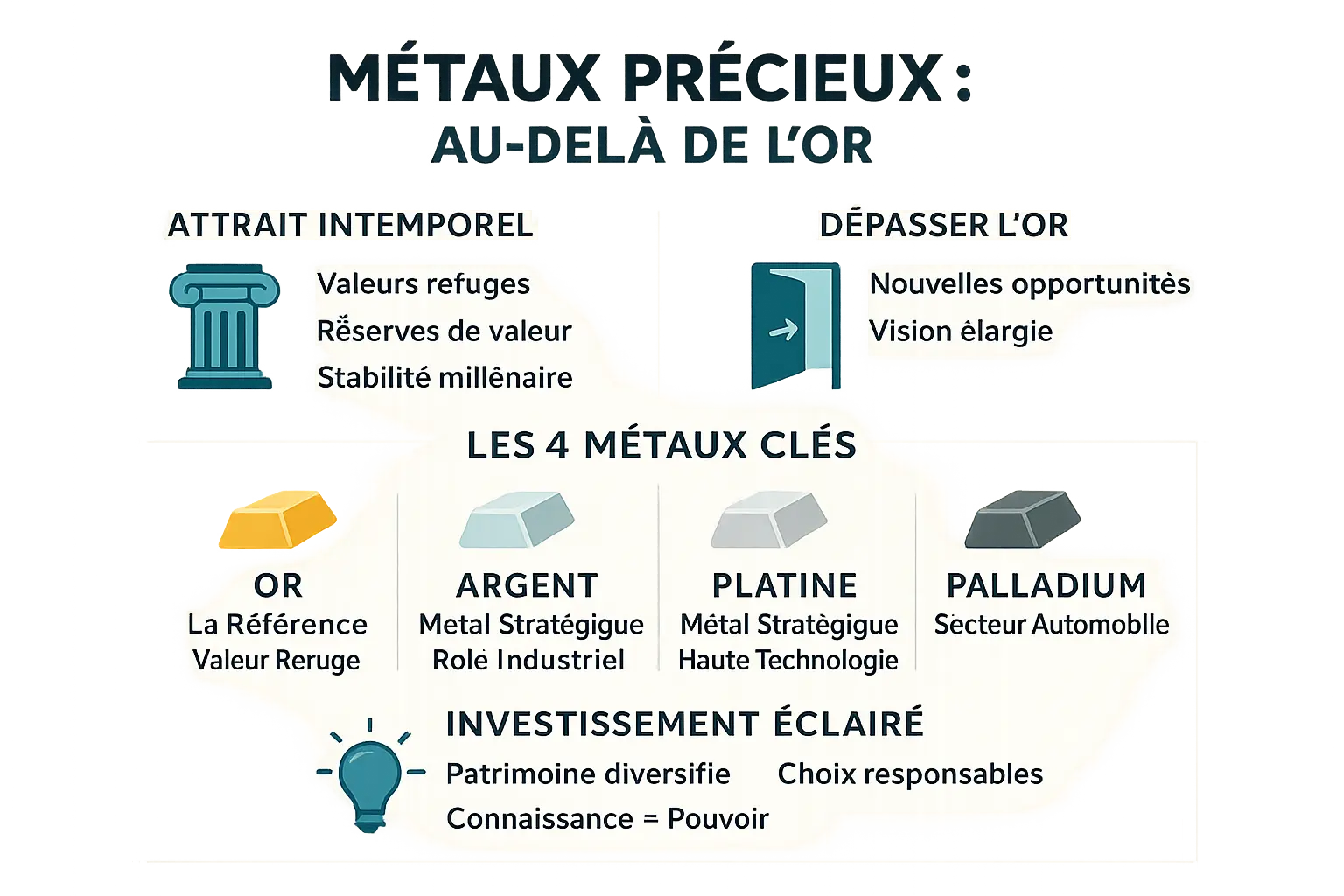
Depuis des millénaires, les métaux précieux incar nent la valeur refuge et les réserves de valeur. Symboles de richesse et de stabilité, ils traversent les ères en s’adaptant aux besoins des sociétés. Comme un arbre centenaire qui résiste aux tempêtes, chacun d’eux porte une histoire unique, une fonction précise dans l’économie mondiale.
L’or reste incontestablement la référence universelle. Pourtant, limiter son regard à ce seul métal, c’est ignorer des opportunités et des dynamiques distinctes. L’argent, le platine et le palladium sont des métaux stratégiques aux profils variés. Tandis que l’or brille par sa stabilité, ces alliés moins évidents révèlent des potentiels industriels exceptionnels, des rôles clés dans la transition énergétique, et des parcours moins linéaires mais parfois plus prometteurs.
Comprendre ces quatre métaux, c’est ouvrir la porte à un investissement éclairé, en phase avec ses valeurs et ses objectifs. Chez Namlora, nous croyons en construire un patrimoine diversifié, alliant sécurité et innovation. Chaque métal raconte une histoire économique, technologique et écologique. En saisir les subtilités, c’est choisir de cultiver sa richesse avec sagesse, en harmonie avec sa foi et ses convictions. Car investir, ce n’est pas spéculer : c’est semer aujourd’hui pour récolter demain, avec confiance et responsabilité.
L’or (🟡) : le pilier incontournable de votre patrimoine
Un symbole de confiance universel
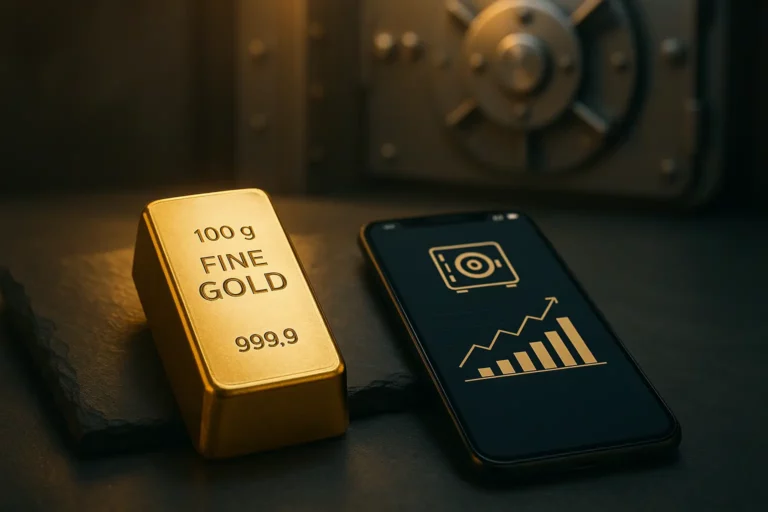
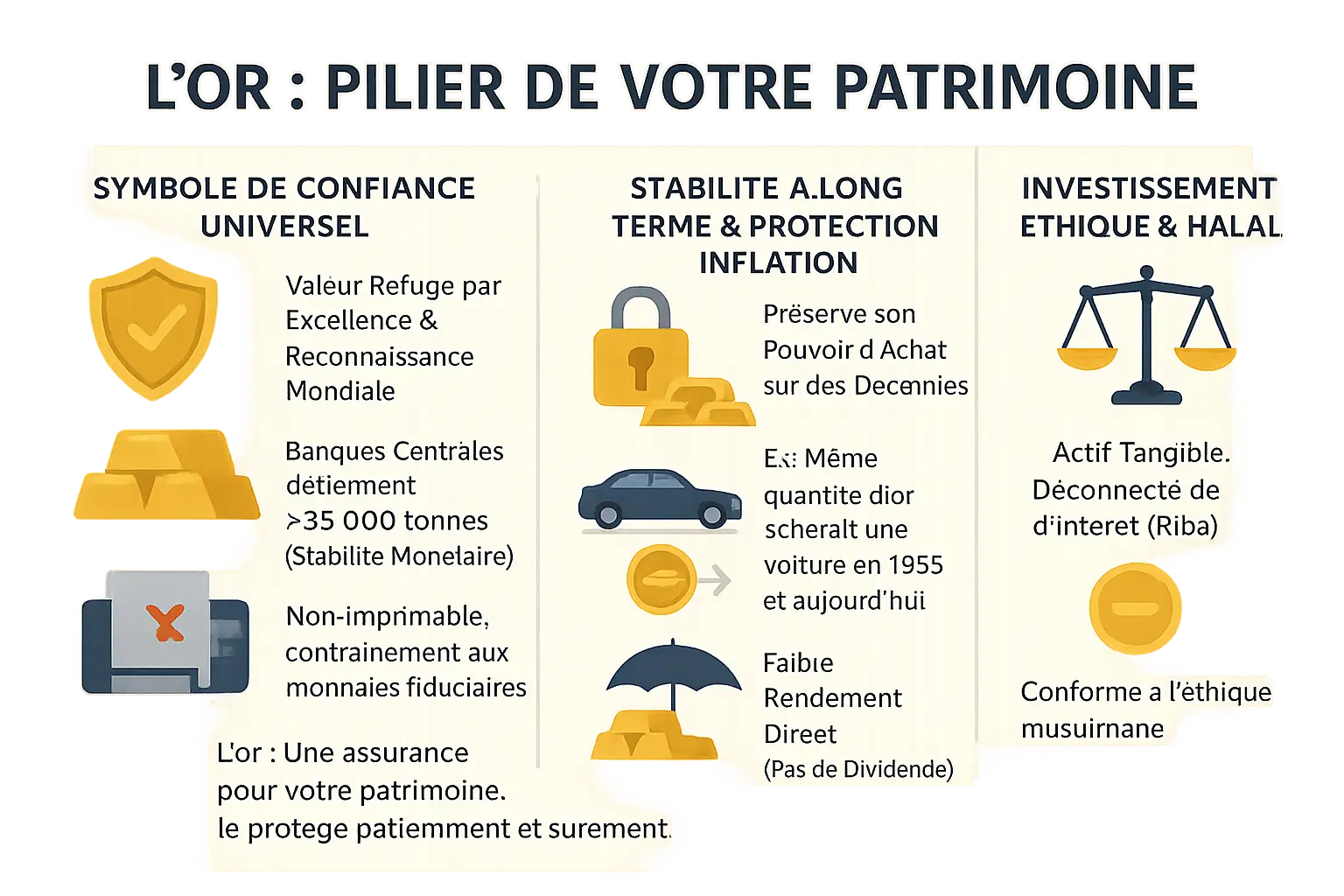
Depuis l’Antiquité, l’or incarne la stabilité et la valeur. Contrairement aux monnaies fiduciaires, sa rareté intrinsèque empêche toute émission incontrôlée. Pourquoi des banques centrales détiennent-elles plus de 35 000 tonnes d’or ? Parce que ce métal jaune constitue un socle de confiance dans les systèmes monétaires.
Sa reconnaissance universelle transcende les frontières et les cultures. En période d’incertitude géopolitique ou monétaire, l’or agit comme une ancre pour les réserves des États. C’est un actif tangible, sans dépendance envers les politiques économiques conjoncturelles.
Stabilité à long terme et protection contre l’inflation
Imaginez ce paradoxe : en 1935, 14 onces d’or achetaient une voiture de base. Aujourd’hui, ces mêmes onces permettent toujours cet achat, malgré 90 ans d’inflation. Cette constance relative prouve son pouvoir de préservation de valeur.
Pourtant, l’or ne génère pas de revenus directs comme les obligations ou les actions. Sa volatilité court terme peut inquiéter, mais son rôle stratégique est de stabiliser un portefeuille. C’est une assurance silencieuse, qui s’affirme dans les tempêtes financières.
L’or dans une perspective d’investissement halal
Pourquoi l’or physique est-il conforme à la charia ? Parce qu’il incarne un actif tangible, sans lien avec le système d’intérêt (Riba). C’est un investissement éthique, fondé sur la possession réelle d’un bien précieux.
L’or n’est pas un simple investissement, c’est une assurance pour votre patrimoine. Il ne vous rendra pas riche rapidement, mais il protégera votre richesse patiemment et sûrement.
Les produits financiers halal en or exigent des réserves physiques vérifiables. Découvrez les méthodes pour investir dans l’or en Islam, alliant tradition et modernité. Cette transparence rassure les investisseurs musulmans souhaitant concilier foi et croissance patrimoniale.
L’argent (⚪) : le métal à double visage, entre refuge et industrie
Le « petit frère » plus volatil de l’or
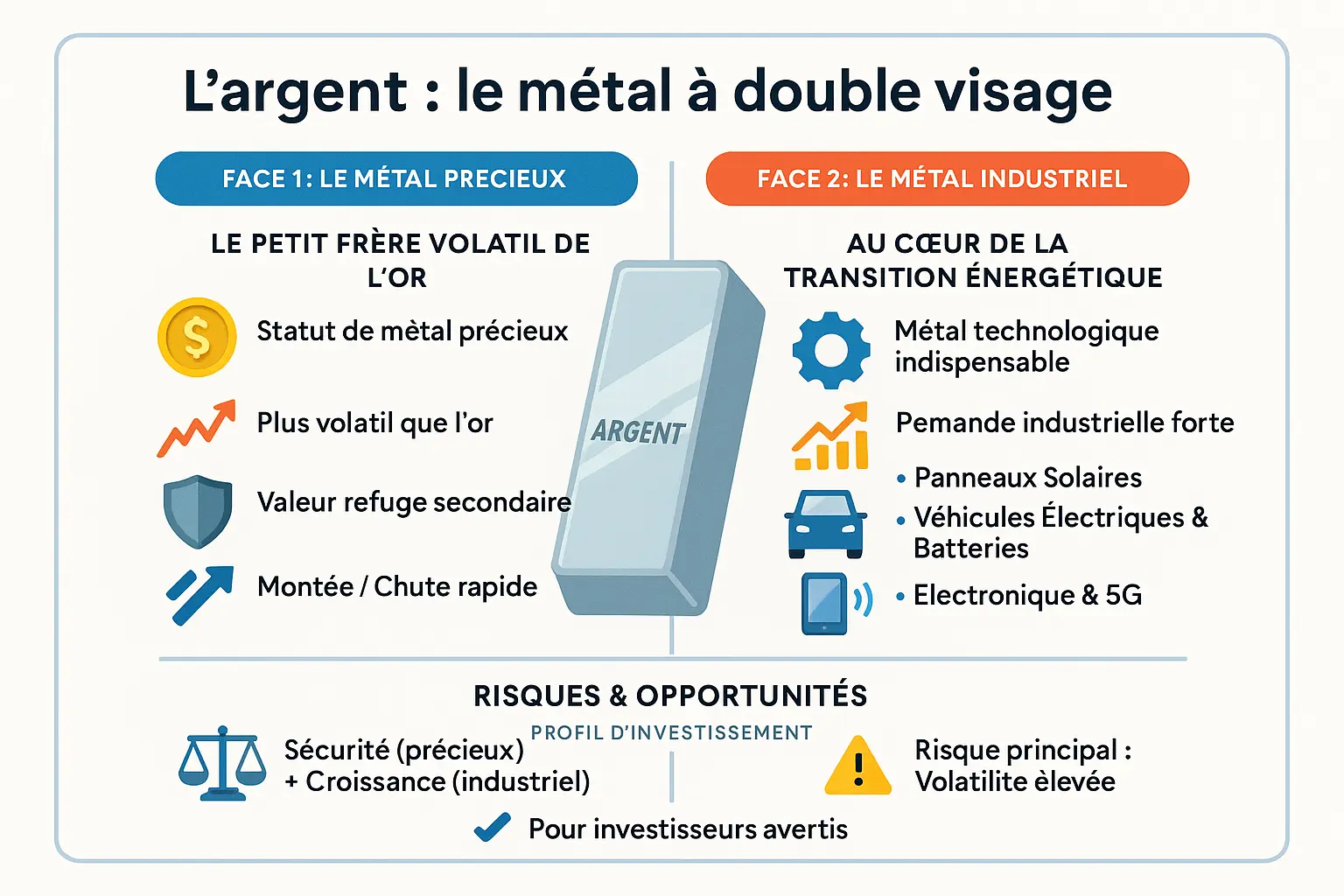
L’argent partage avec l’or son statut de métal précieux, mais sa nature est plus nerveuse. Sa volatilité s’explique par sa double fonction : refuge monétaire et matière première industrielle. Quand le marché grimpe, il s’envole plus vite que l’or; quand il recule, il chute plus brutalement.
Le ratio or/argent, autrefois de 15/1, dépasse parfois 80/1 aujourd’hui. Cette divergence suggère un potentiel de rattrapage si la demande industrielle s’accélère. Pour les investisseurs avertis, il représente une valeur refuge secondaire au profil atypique.
Le véritable atout : un métal au cœur de la transition énergétique
Sa conductivité électrique exceptionnelle en fait un allié stratégique pour les énergies renouvelables et les technologies modernes :
- Panneaux solaires ☀️ : indispensable pour capter l’énergie solaire
- Véhicules électriques 🔋 : utilisé dans les systèmes de recharge (25 à 50g par voiture)
- Électronique 📡 : présent dans les circuits imprimés, accélérant le numérique
La Banque mondiale classe l’argent parmi les métaux critiques. Sa demande industrielle devrait quadrupler d’ici 2050, portée par l’électrification des transports et les énergies propres.
Risques et opportunités
Sa volatilité, supérieure à l’or, en fait un actif pour portefeuilles équilibrés. Les fluctuations des secteurs technologique et automobile influencent directement sa valeur. Cet investissement atypique convient à ceux souhaitant capitaliser sur la transition énergétique en maintenant un socle de sécurité.
Namlora propose des solutions islamiquement conformes, intégrant des métaux précieux dans une approche responsable et durable.
Le platine (⚫) et le palladium (🚗) : les métaux stratégiques de l’industrie automobile
Le platine : le géant rare et sous-évalué
Avec moins de 190 tonnes extraites annuellement, le platine incarne la rareté. 85 % de sa production provient d’Afrique du Sud et de Russie, des zones à risques géopolitiques avérés. Utilisé à 40 % dans les catalyseurs diesel, ce métal noble résiste à la corrosion et aux hautes températures, mais sa valeur reste inférieure à celle de l’or malgré une rareté 15 fois plus grande.
Son avenir s’inscrit dans la transition hydrogène. Des projets européens visant la production d’hydrogène décarboné dépendent du platine. Cependant, les recherches sur des alternatives laissent planer des interrogations sur sa domination industrielle future.
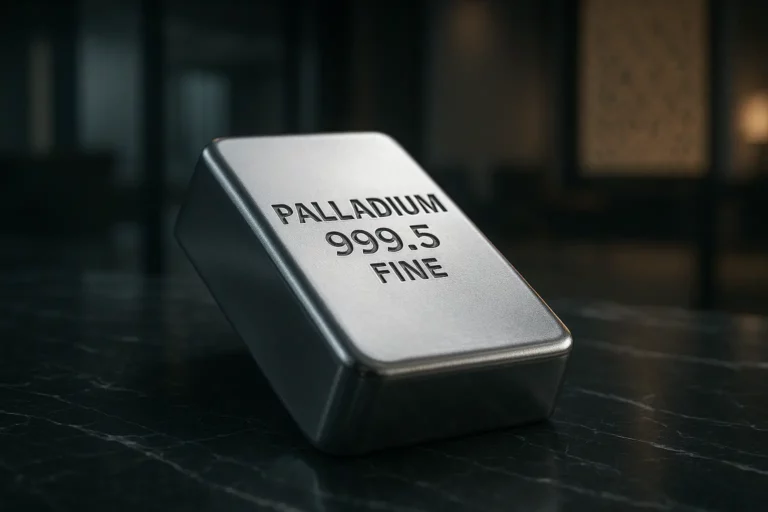
Le palladium : l’étoile spéculative face à un tournant
Le palladium a dépassé le cours de l’or en 2020, porté par sa demande automobile (80 %). Sa volatilité extrême en fait un métal stratégique mais risqué. Les tensions géopolitiques ont fait bondir son prix, illustrant sa sensibilité. La montée des véhicules électriques menace sa domination, rendant son avenir industriel incertain.
Pour un investissement islamique éthique, comprendre son intégration dans une diversification halal est essentiel. Il symbolise le défi de tout investisseur : capturer les opportunités tout en évaluant les risques à long terme.
Enjeux éthiques et géopolitiques
Concentrée en zones instables, la production de platine reste vulnérable : une grève sud-africaine peut faire grimper son cours de 10 %. L’économie circulaire offre une réponse via le recyclage des catalyseurs automobiles (8 grammes en moyenne par unité). Ce processus réduit l’impact environnemental et les risques d’approvisionnement, tout en valorisant des pratiques éthiques.
L’avenir de ces métaux dépendra autant de l’automobile que des innovations. Comme tout investissement conforme à la charia, la transparence sur la chaîne d’approvisionnement et une gestion prudente des risques restent fondamentales. Leur rôle dans la transition écologique renforce leur pertinence, à condition de concilier rareté, éthique et stabilité géopolitique.
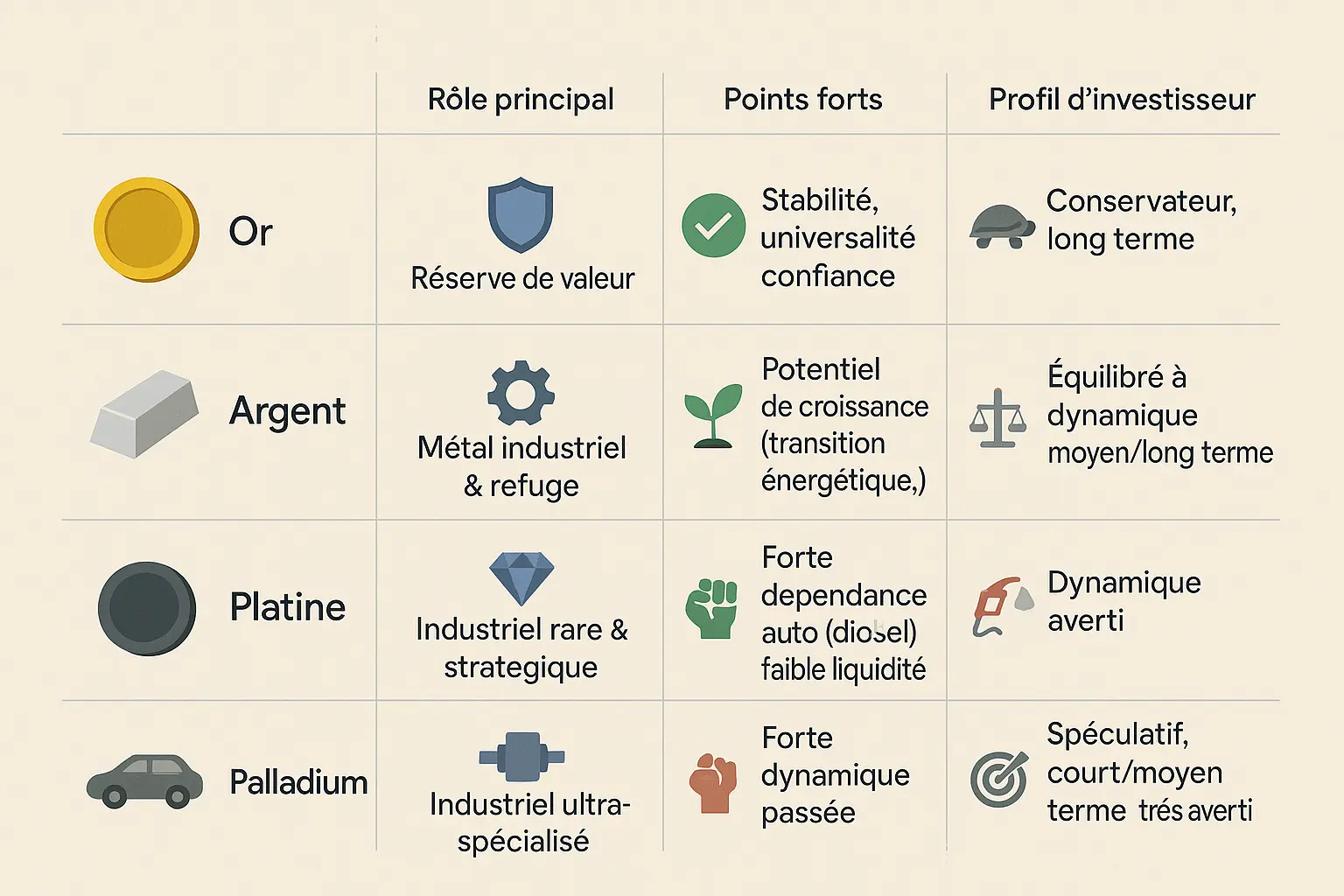
| Métal | Rôle principal | Points forts | Risques principaux | Profil d’investisseur |
|---|---|---|---|---|
| Or 🟡 | Réserve de valeur | Stabilité, universalité, confiance des États | Peu de rendement direct | Conservateur, long terme |
| Argent ⚪ | Métal industriel & refuge | Potentiel de croissance (transition énergétique), plus accessible | Volatilité très élevée | Équilibré à dynamique, moyen/long terme |
| Platine ⚫ | Industriel rare & stratégique | Rareté, potentiel de rebond, diversification | Dépendance à l’automobile (diesel), faible liquidité | Dynamique, averti |
| Palladium 🚗 | Industriel ultra-spécialisé | Fortes dynamiques passées, tension sur l’offre | Risque de bulle, dépendance extrême à l’automobile | Spéculatif, court/moyen terme, très averti |
Le choix entre or, argent, platine et palladium dépend entièrement de votre profil d’investisseur, de votre horizon de temps et de votre tolérance au risque. Chaque métal répond à des besoins spécifiques : l’or assure la stabilité, l’argent profite de la transition énergétique, le platine offre une rareté stratégique, tandis que le palladium reste spéculatif. Aucun n’est « meilleur » que les autres, mais chacun a sa place dans une stratégie diversifiée.
Comment investir dans les métaux précieux de manière concrète et responsable
Les différentes portes d’entrée vers les métaux précieux
Investir dans l’or, l’argent, le platine ou le palladium se décline en plusieurs formules. Chacune a ses avantages, ses risques et son degré de contrôle. Voici les trois principales options :
- L’achat physique (pièces et lingots) : Acquérir des lingots ou des pièces en or, argent ou palladium offre l’avantage d’un actif tangible. La possession directe rassure, surtout en période de crise, mais le stockage sécurisé est indispensable. Pensez à un coffre bancaire ou à des sociétés spécialisées.
- Les produits financiers (ETF/ETC) : Ces fonds répliquent le cours des métaux sans en posséder physiquement. Pratique pour les investisseurs actifs, mais attention aux frais de gestion récurrents. Vous ne détenez pas le métal, ce qui expose à un risque de contrepartie si l’émetteur fait défaut.
- Les actions de sociétés minières : Acheter des titres d’entreprises extractives offre une exposition indirecte. Le cours dépend autant du métal que de la santé financière de l’entreprise. Ce choix convient aux investisseurs prêts à étudier à la fois le métal et la gestion de l’entreprise.
Les principes d’un investissement prudent et conforme à vos valeurs
Les métaux précieux ne sont pas des placements sans risque. L’or, symbole de stabilité, peut perdre 40 % de sa valeur en quelques mois. L’argent, plus volatil, réagit fortement aux cycles économiques. Le platine et le palladium, liés à l’industrie automobile, dépendent des évolutions technologiques.
En France, l’or physique est exonéré de TVA à l’achat, mais soumis à une taxe forfaitaire de 11,5 % à la revente. Pour mieux protéger votre épargne, limitez l’allocation à 5-10 % de votre patrimoine global. Les métaux précieux complètent, sans remplacer, un portefeuille diversifié.
Les autorités financières classifient ces actifs comme « atypiques ». Avant de vous lancer, consultez les avertissements de l’AMF. Une mise en garde cruciale : le capital investi n’est jamais garanti.
Un investissement réussi n’est pas celui qui rapporte le plus, mais celui que l’on comprend le mieux. Prenez le temps de vous former avant de confier votre épargne.
Bâtir votre stratégie : les métaux précieux comme fondation de votre avenir financier
Les métaux précieux ne se résument pas à leur éclat. L’or incarne la stabilité, préservant la valeur face à l’inflation monétaire, comme en témoigne son maintien à long terme malgré les crises. L’argent, moins cher à l’achat, s’ancre dans l’innovation technologique : il est indispensable aux panneaux solaires et batteries électriques, secteurs clés de demain. Les platine et palladium, bien que plus volatils, offrent des opportunités ciblées pour les experts, notamment dans l’industrie automobile, où leurs propriétés catalytiques limitent les émissions polluantes.
La diversification reste votre bouclier contre les imprévus. En répartissant vos investissements entre ces métaux, vous limitez les chocs liés aux fluctuations des marchés. Chez Namlora, cette logique s’inscrit dans une vision éthique : chaque décision financière doit servir l’homme et préserver les ressources naturelles. Par exemple, l’or recyclé ou certifié Fairmined garantit une extraction respectueuse des droits humains et de l’environnement, alignant vos gains avec des valeurs universelles.
En choisissant consciemment vos actifs, vous devenez un pilier d’une économie plus juste. Investir de manière responsable, c’est non seulement sécuriser votre patrimoine, mais aussi œuvrer pour un avenir où la finance reflète vos convictions. Avec Namlora, chaque transaction participe à un réseau solidaire, où transparence et croissance durable guident chaque choix. L’épargne devient un acte de foi et de confiance, pour soi, sa famille et la société.
L’or, pilier de stabilité et réserve universelle. L’argent, moteur de croissance grâce à son rôle dans la transition énergétique. Platine et palladium, choix stratégiques liés à l’automobile, menacés par les évolutions tech. Diversifier, c’est préparer l’avenir avec sagesse. Chez Namlora, chaque investissement allie connaissance, éthique et confiance pour construire un patrimoine résilient et sur des valeurs claires.
FAQ
Quels métaux précieux investir pour une stratégie équilibrée ?
Pour construire un portefeuille résilient, l’équilibre est essentiel. L’or, pilier de stabilité, protège votre épargne à long terme. L’argent, plus volatil, offre un levier puissant grâce à sa demande industrielle liée à la transition énergétique. Le platine, sous-évalué malgré sa rareté, reste stratégique pour qui anticipe des innovations. Le palladium, star éphémère, attire les investisseurs audacieux grâce à sa demande automobile, mais son avenir dépend des évolutions du marché électrique. La diversification entre ces métaux, en fonction de votre profil, crée une fondation solide.
Dans quel métal précieux dois-je investir selon mon profil ?
Le choix dépend de vos objectifs et de votre tolérance au risque. Un investisseur conservateur optera pour l’or, valeur refuge universelle, idéale pour préserver son patrimoine. Ceux cherchant à allier stabilité et croissance modérée pencheront vers l’argent, soutenu par les technologies vertes. Les profils avertis, prêts à accepter plus de volatilité, exploreront le platine (rareté stratégique) ou le palladium (opportunités à court terme). Comme un jardinier qui plante diverses espèces pour une récolte durable, une allocation équilibrée entre ces métaux offre une protection contre les tempêtes économiques.
Quel est le métal le plus rentable pour un investissement en 2025 ?
« Rentable » dépend de votre horizon. À court terme, le palladium a montré des pics impressionnants, mais sa dépendance à l’automobile reste un risque. L’argent, soutenu par la demande industrielle, pourrait dépasser l’or si les ratios historiques se redressent. À long terme, l’or reste roi pour sa stabilité éprouvée, comme un chêne qui résiste aux ouragans. La réponse réside dans le juste dosage : une part solide en or, un complément dynamique en argent, et des touches audacieuses en platine/palladium pour les plus entreprenants.
Est-il rentable d’investir dans l’or en 2025 ?
Si « rentable » signifie « protéger votre capital », l’or reste inégalé. Son prix varie à court terme, mais sur 50 ans, il a préservé son pouvoir d’achat, comme une ancre dans la tempête monétaire. Les banques centrales en détiennent des réserves massives, témoignant de sa confiance éternelle. Pour qui cherche un refuge contre l’inflation ou l’instabilité, son « manque de rendement direct » est un faux défaut : sa vraie valeur est sa capacité à traverser les crises sans se consumer.
Est-il rentable d’investir dans l’or en 2025 ?
Si « rentable » signifie « protéger votre capital », l’or reste inégalé. Son prix varie à court terme, mais sur 50 ans, il a préservé son pouvoir d’achat, comme une ancre dans la tempête monétaire. Les banques centrales en détiennent des réserves massives, témoignant de sa confiance éternelle. Pour qui cherche un refuge contre l’inflation ou l’instabilité, son « manque de rendement direct » est un faux défaut : sa vraie valeur est sa capacité à traverser les crises sans se consumer.
Quels sont les cours des métaux précieux prévus pour 2025 ?
Prédire les marchés est périlleux, mais les tendances émergent. La demande industrielle pour l’argent devrait croître avec les panneaux solaires et véhicules électriques. Le platine, sous-évalué, bénéficiera peut-être de l’hydrogène vert qui nécessite ses propriétés. Le palladium, très lié aux normes automobiles, pourrait voir sa valeur fluctuer avec l’essor des électriques. L’or, moins sensible aux cycles industriels, restera un baromètre de la confiance envers les monnaies fiduciaires. Comme pour la météo, préparez-vous plutôt que de prédire.
Quel est le cours du platine sur 10 ans et sa place dans l’or portefeuille ?
Sur la dernière décennie, le platine a perdu du terrain contre l’or, victime de sa dépendance à l’automobile diesel en déclin. Pourtant, sa rareté (moins de 190 tonnes extraites annuellement) et ses applications dans l’hydrogène ou la médecine offrent un potentiel. Comme un diamant brut, il exige patience et discernement : son éclat se révèle aux yeux des investisseurs capables d’attendre que de nouvelles technologies valorisent son unicité.
Quel métal rapporte le plus à court terme ? Et à long terme ?
À court terme, le palladium a battu des records, dopé par les normes anti-pollution, mais sa bulle spéculative peut se casser. À long terme, l’or et l’argent restent les véritables gagnants : l’or pour sa pérennité, l’argent pour son double rôle industriel. Comme dans une course de fond, c’est la constance qui paie. Les métaux rares comme le platine ou le palladium ressemblent à des sprints : rapides, mais risqués.
Quel métal attire l’argent des investisseurs en 2025 ?
L’argent attire les regards pour sa double casquette : refuge et métal technologique. Les fonds spéculatifs misent sur sa demande dans la 5G et l’énergie solaire. Le palladium reste plébiscité par les traders pour ses tensions d’offre, tandis que l’or séduit les épargnants soucieux de stabilité. Le platine, discret, pourrait surprendre si la transition verte s’accélère. Comme les abeilles et le miel, les flux d’argent suivent les fleurs de la croissance.
Quel métal vaut plus cher que l’or aujourd’hui et pourquoi ?
En 2020, le palladium a dépassé l’or en valeur par once, porté par sa pénurie et sa demande automobile. Ce record illustre comment la rareté temporaire peut surpasser la tradition. Pourtant, cette hiérarchie est volage : demain, l’argent, sous-évalué en ratio or/argent, pourrait reprendre sa couronne. Le platine, plus lourd mais moins cher, rappelle qu’un diamant brut vaut moins qu’un diamant taillé… jusqu’à ce qu’on le taille.